
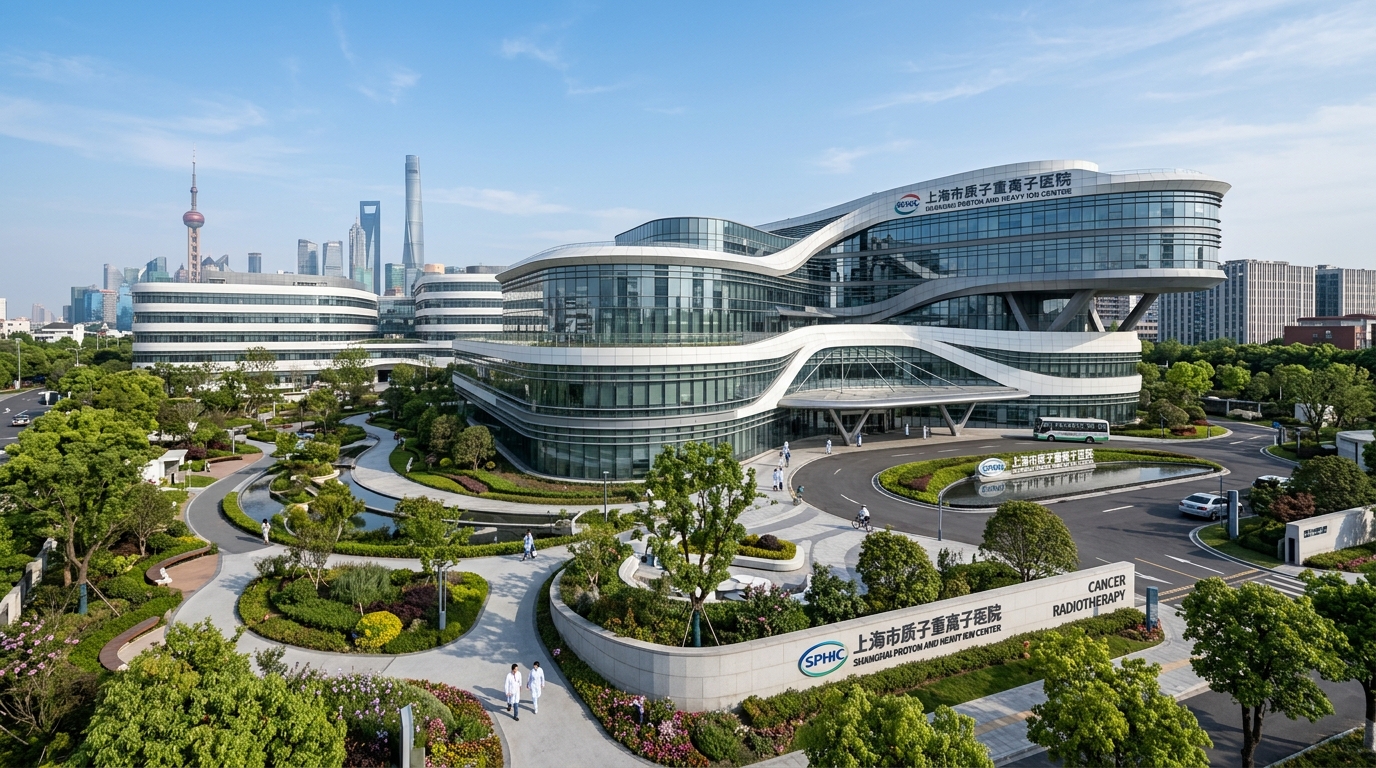
NATIONAL PARTICLE RADIOTHERAPY CLINICAL CENTER · FIRST-IN-CLASS DUAL BEAM

Shanghai Proton and Heavy Ion Center (SPHIC)

Founded in 2015 as China’s premier advanced particle therapy institution, the Shanghai Proton and Heavy Ion Center (SPHIC) is one of only a handful of medical facilities globally equipped with both proton beam and heavy carbon ion beam radiotherapy systems operating from a single synchrotron accelerator complex.

Utilizing the unique physical Bragg Peak phenomenon, SPHIC delivers millimeter-accurate destructive energy directly into tumors with near-zero exit dose to surrounding critical organs. Over 5,500 cancer patients have completed treatment at SPHIC, establishing global benchmarks for inoperable skull base chordomas, head and neck carcinomas, and prostate cancer.

Shanghai Proton and Heavy Ion Center SPHIC
Shanghai International Medical Zone (SIMZ) Located in Pudong New Area, 25 minutes from Shanghai Pudong International Airport (PVG) with dedicated international transfer.
Est. 2015
Particle Pioneer
China’s first dual proton & carbon ion center
5,500+
Treated Patients
Proven clinical safety & high local control
Dual Beam
Carbon & Proton
Sub-millimeter synchrotron ballistics
< 1.0 mm
Bragg Peak Target
Ultra-low collateral organ toxicity

FOUR CLINICAL EXCELLENCE PILLARS

Core Particle Radiotherapy Capabilities

SPHIC integrates state-of-the-art synchrotron beam delivery with 4D-CT respiratory gating, offering painless, non-invasive curative options for deep-seated radioresistant tumors.

Carbon Ion Therapy

High linear energy transfer (LET) delivering 3x higher relative biological effectiveness (RBE) against radioresistant hypoxic tumors.

✓ Accredited Clinical Excellence Pillar

Proton Beam Therapy

Sharp Bragg peak dose fall-off protecting sensitive adjacent neurovascular, optical, and gastrointestinal structures.

✓ Accredited Clinical Excellence Pillar

Skull Base & Head/Neck

Global-leading protocols for skull base chordomas, chondrosarcomas, adenoid cystic carcinomas, and NPC recurrences.

✓ Accredited Clinical Excellence Pillar

Thoracic & Pelvic Precision

12–16 fraction hypofractionated curative programs for localized prostate cancer, early lung cancer, and pancreatic tumors.

✓ Accredited Clinical Excellence Pillar

WORLD-RENOWNED PARTICLE ONCOLOGY PIONEERS

Academic Leadership & Clinical Faculty

Led by past presidents of national radiation societies and internationally accredited medical physicists.
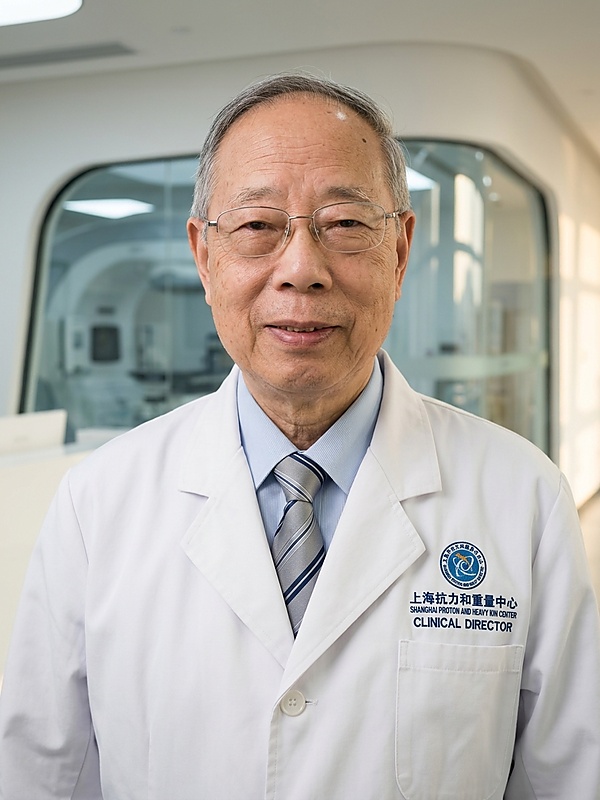
Prof. Jiang Guoliang, MD

Prof. Jiang Guoliang, MD

Executive Hospital President · Senior Chief of Radiation Oncology

Former President of the Chinese Society of Radiation Oncology (CSTRO) and Fellow of the American Society for Radiation Oncology (ASTRO). Prof. Jiang pioneered China’s national particle therapy protocols and clinical indications.
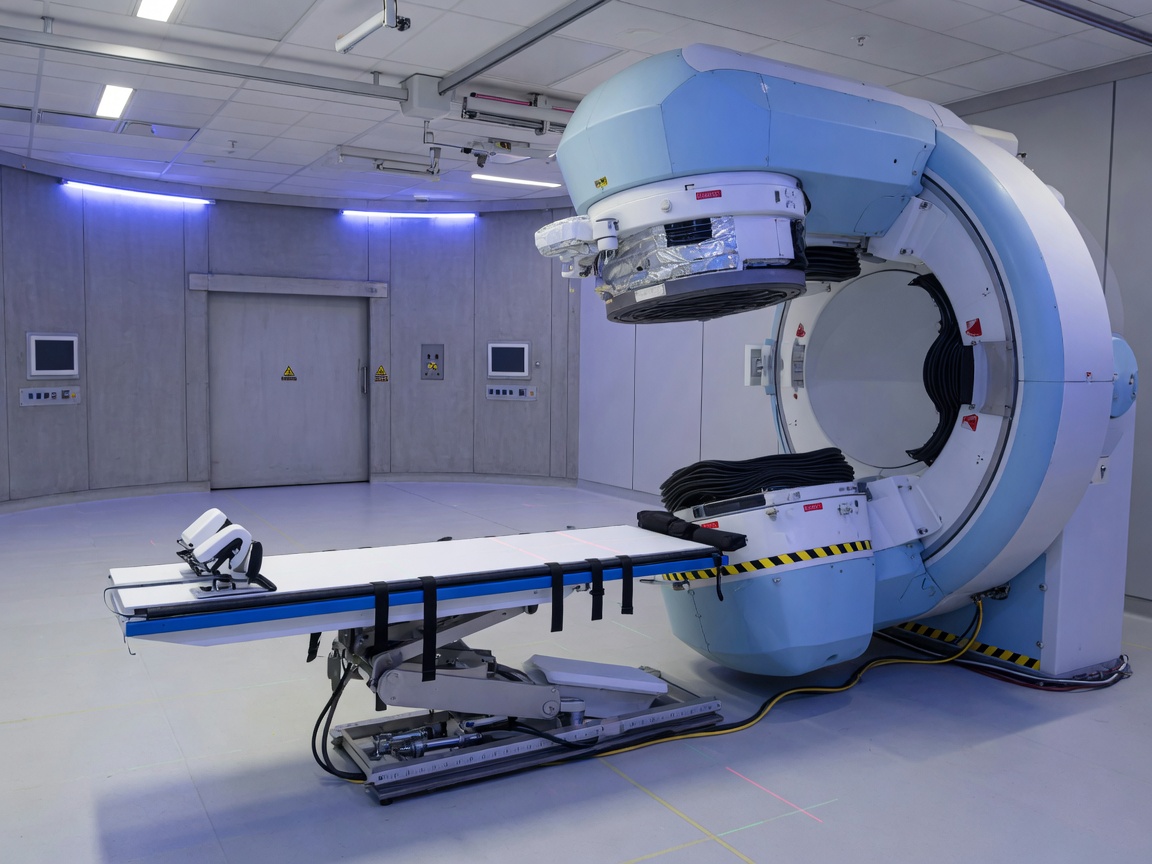
Focus: Carbon ion protocol design, complex skull base malignancies, pediatric particle therapy, ASTRO honorary fellowship.
View Full Academician / Specialist Profile →
Prof. Lu Jiade, MD, MBA

Prof. Lu Jiade, MD, MBA

Executive Vice President · Particle Therapy Clinical Director

Internationally celebrated radiation oncologist with over 25 years of particle radiotherapy leadership in the US and Asia. Prof. Lu specializes in high-precision stereotactic proton/carbon therapy for central nervous system tumors.

Focus: Stereotactic particle radiosurgery, head and neck adenoid cystic carcinoma, pediatric brain tumors, clinical trial optimization.
Request Case Review with This Specialist →

CASE INTAKE & SPECIALIST TRIAGE

Initiate Your Case Review with SPHIC

Submit your contact details, confirmed diagnosis, and main question below. You do not need to upload any medical files at this stage. Our clinical coordinator will contact you directly within 24–48 hours to discuss potential SPHIC particle therapy pathways in China and assist you in gathering the specific medical records needed for expert hospital review.

    PATIENT INQUIRIES

    Frequently Asked Questions About SPHIC

    Key clinical, logistical, and technical facts regarding international admissions, surgical evaluations, advanced technology access, and personalized care coordination at SPHIC.

    Conventional photon (X-ray) radiation deposits energy all along its path, exposing healthy tissues before and after the tumor. Carbon ions and protons release the vast majority of their energy at a precise depth (the Bragg Peak) and stop completely, eliminating exit dose and delivering 3x higher biological cell kill.

    A standard course ranges from 10 to 25 fractions delivered once daily from Monday to Friday, spanning approximately 2 to 4 weeks. Because particle therapy causes minimal acute toxicity, most patients undergo treatment entirely on an outpatient basis.

    Yes. One of SPHIC’s greatest clinical strengths is re-irradiation for local tumor recurrences. Thanks to sub-millimeter margins and zero exit dose, previously irradiated tumors can often be treated safely without exceeding spinal cord or brainstem tolerances.

    Patients must provide high-resolution DICOM CT/MRI scans performed within the past 4 to 6 weeks, histopathology biopsy reports, surgical operation summaries, and records of any prior radiation treatment plans.

    MODERN CLINICAL INFRASTRUCTURE

    Strategic Multi-Campus Setup & International Transit

    Modern clinical hubs designed for seamless aeromedical transport, multidisciplinary conferences, and dedicated international inpatient care.

    Main Clinical Facility

    SPHIC Particle Clinical Campus

    4365 Kangxin Road, Pudong New Area, Shanghai

    Anchored in the Shanghai International Medical Zone, housing the synchrotron particle complex, outpatient treatment wings, and international consultation suites.

    International Suite

    SIMZ Medical Concierge Pavilion

    SIMZ Center, Pudong New Area, Shanghai

    Dedicated VIP reception facilities providing private multilingual consultation lounges, recovery accommodations, and express PVG airport transit.

    Shanghai Proton and Heavy Ion Center (SPHIC)