
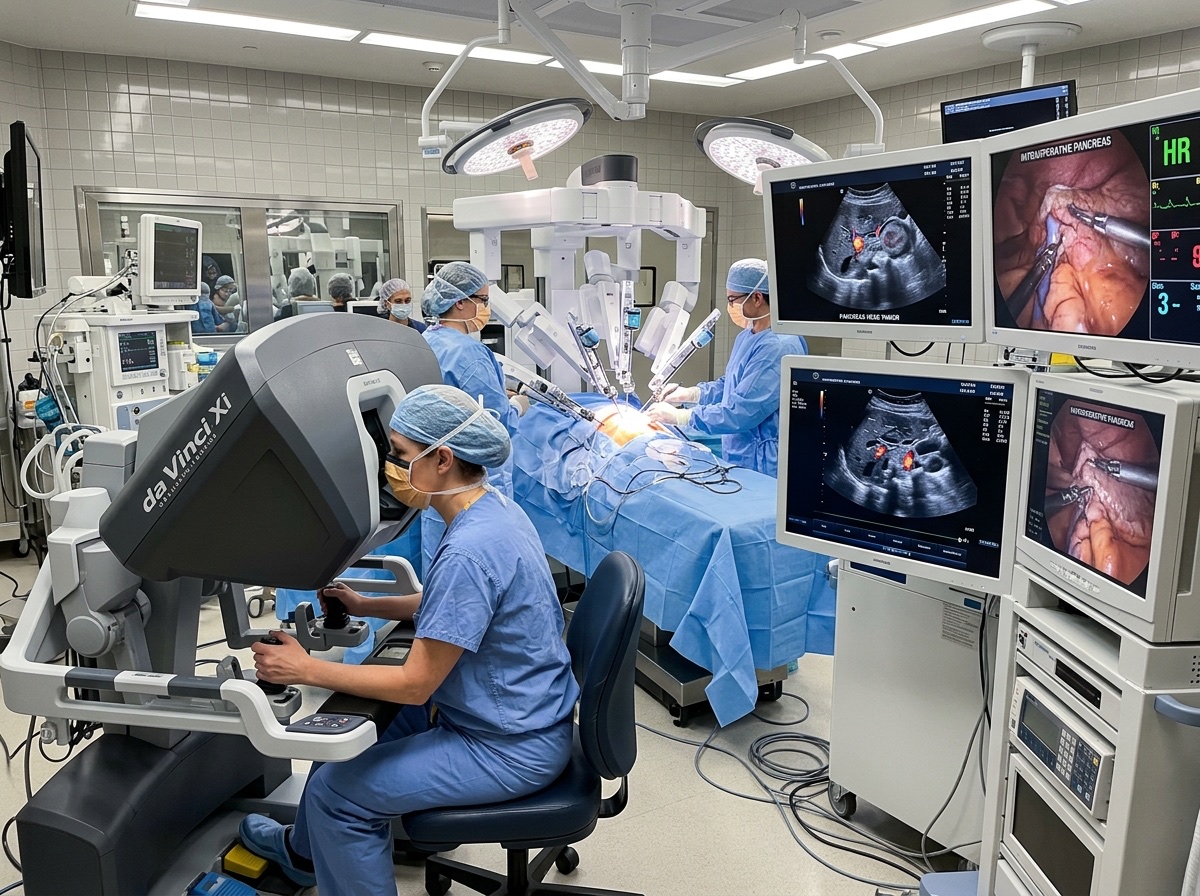
NON-THERMAL NANOKNIFE & CONVERSION THERAPY
Advanced Pancreatic Cancer Care in China
Pancreatic cancer is notoriously challenging because tumors frequently wrap around major abdominal blood vessels. China’s top pancreatic cancer centers are global leaders in irreversible electroporation (NanoKnife ablation), complex vascular reconstruction surgery, and multi-agent conversion therapies designed to turn inoperable tumors into candidates for successful surgical removal.
- Pancreatic Adenocarcinoma & Neuroendocrine Tumors (pNET)
- Locally Advanced Tumors Enveloping Celiac or Mesenteric Arteries
- Patients Seeking Safe Ablation Without Thermal Vessel Damage
- World-Leading Experience in NanoKnife (IRE) Electroporation
- Specialized Arterial & Venous Vascular Reconstruction Surgery
- Multidisciplinary Board of Pancreatic Surgeons & Interventionalists
ELECTROPORATION, SURGERY & SYSTEMIC THERAPIES
Key Pancreatic Cancer Treatments in China
Non-thermal NanoKnife (IRE) ablation, vascular reconstruction surgery, and multi-agent conversion therapy.
Non-Thermal NanoKnife (IRE)
Vascular Reconstruction Surgery
Intensive Conversion Regimens
WHY CHOOSE US
Why Choose China Cancer Help for Pancreatic Cancer Care
A specialized clinical pathway connecting international patients with China’s highest-volume pancreatic surgery institutes.
China has accumulated extensive clinical volume in treating locally advanced pancreatic cancer using Irreversible Electroporation (IRE NanoKnife). Unlike heat-based ablation, IRE uses non-thermal electrical fields that safely destroy tumor cells right up to the vessel walls without damaging vital blood supply.
Pancreatic surgical centers in China routinely perform high-difficulty Whipple procedures and total pancreatectomies with vascular resection and reconstruction. All treatment plans are reviewed by a dedicated pancreatic MDT with transparent hospital fee schedules.
CASE EVALUATION PATHWAY
A Structured Pathway from Records to Care
A transparent, four-stage continuum connecting preliminary clinical evaluation to official hospital acceptance, specialized inpatient care, and ongoing continuity.
01. Submit Records Online
02. Remote MDT Review
03. Visa & Admission
04. Treatment & Follow-up
PATIENT FAQS
Frequently Asked Questions
Key clinical, financial, and logistical insights for international Pancreatic Cancer patients considering advanced treatment in China.
PANCREATIC ONCOLOGY CLINICAL ASSESSMENT
Request a Confidential Case Review for Pancreatic Cancer
Upload your thin-slice pancreatic CT/MRI scans, biopsy records, and tumor marker levels (CA19-9) for a detailed evaluation by our pancreatic tumor board.